 EN
EN


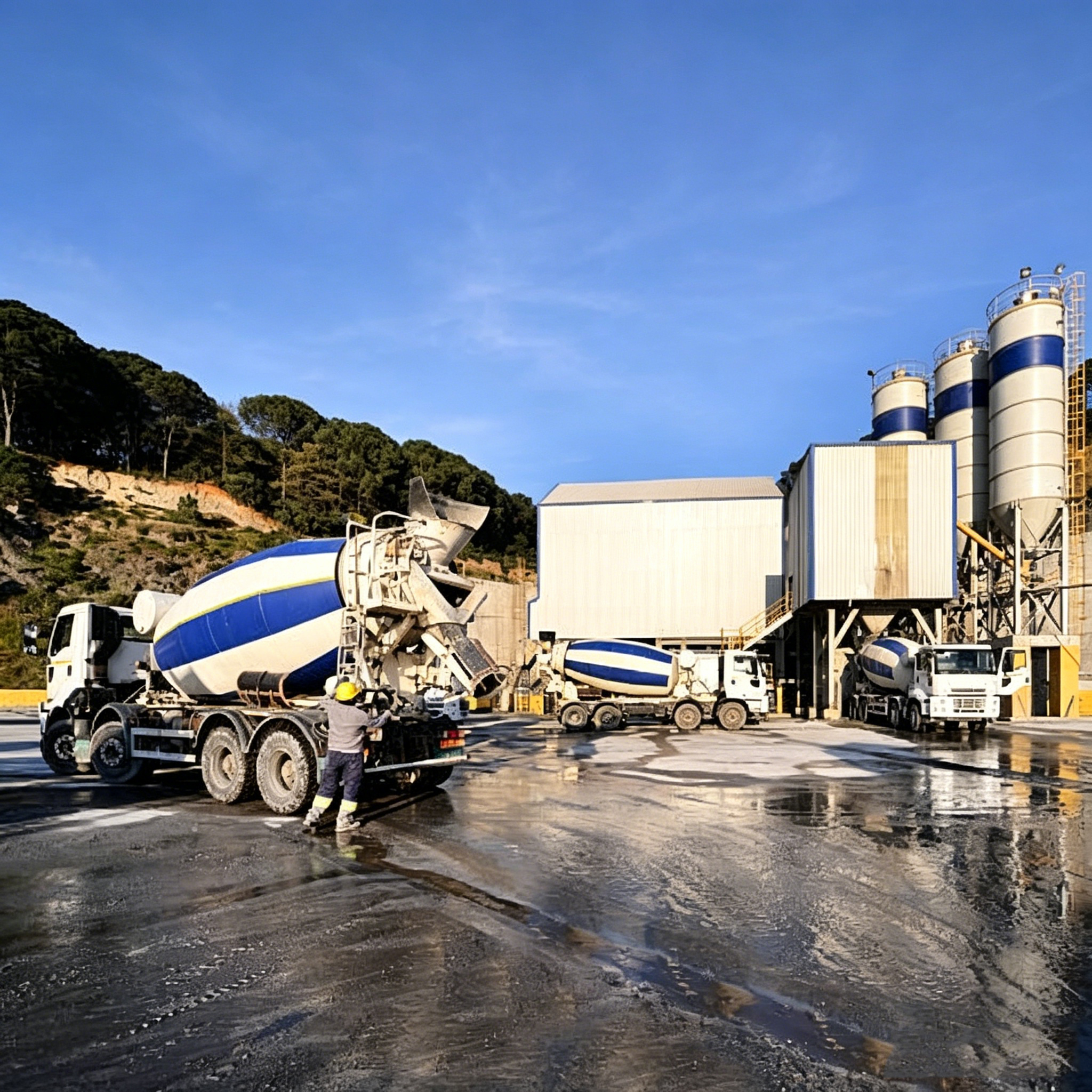
Complete Ready Mix Concrete Plant Configuration Guide
A ready-mix operator in East Africa commissioned a new ready mix concrete plant for an urban market serving 30-40 projects daily. Within the first month, production hit persistent bottlenecks — not from mixer capacity, but from aggregate bin segregation delaying batching cycles by 90 seconds per load. The plant had been specified with three aggregate compartments when the local mix designs required five distinct fractions. Retrofitting two additional bins cost $28,000 and required a two-week shutdown that could have been avoided with proper configuration planning at the specification stage.
A ready mix concrete plant is a system of interconnected subsystems. Getting any one component wrong creates a bottleneck that drags down the entire operation regardless of how capable the mixer is.
The Five Core Systems
Aggregate Batching and Storage System
Aggregate storage drives the footprint and material flow of the entire ready mix concrete plant. In-line compartment bins with four to six individual hoppers, each holding 15-30 cubic meters, feed a weigh belt or cumulative hopper beneath. Radial scraper systems or star-shaped bins provide an alternative for sites where vertical clearance limits preclude elevated bins, though at higher land-area cost per tonne of storage.
The batching sequence — coarse aggregate first, then fine aggregate, then cementitious materials — minimizes segregation and ensures the weigh hopper discharges cleanly. Load cells under each aggregate bin gate provide real-time weight data with ±1% accuracy. Belt speed and gate opening are tuned together so that the last 5-10% of each fraction drops at reduced speed, preventing the overshoot that accumulates into systematic batching errors over hundreds of cycles daily.
Cementitious Material Storage and Weighing
Cement silos are the tallest elements in a ready mix concrete plant layout. A typical configuration includes bolted silos in 100-tonne or 150-tonne capacities for Ordinary Portland Cement, plus separate silos for fly ash, slag, or silica fume depending on local mix design requirements. The number of silos determines how many supplementary cementitious materials the plant can dose without cross-contamination — two silos handle basic OPC-fly ash blends; four silos support complex ternary and quaternary binder systems.
Below each silo, a rotary feeder or butterfly valve controls cement flow into the cement weigh hopper. Aeration pads at the silo cone fluidize the powder for consistent discharge density. The cement weigh hopper is independently suspended on load cells, isolated from vibration transmitted through the plant structure during aggregate batching and mixer operation.
The Mixing Heart
Twin-Shaft Mixers for High-Volume RMC Production
Twin-shaft horizontal mixers dominate modern ready mix concrete plant installations above 60 m³/h. Two counter-rotating shafts with intermeshing mixing arms create intersecting flow patterns that homogenize dry materials within 8-12 seconds and complete a full mix cycle — dry mixing, wet mixing, and discharge — in 35-50 seconds depending on mix design complexity.
The mixing trough is lined with replaceable Ni-Hard or chromium carbide wear plates on the bottom and sides. Mixing arms and blades are cast from high-chromium white iron for abrasion resistance — blade life of 30,000-50,000 batches is achievable with proper adjustment against the trough liner. The discharge door operates hydraulically with a 3-5 second opening time, and the door seal must hold cement paste without leaking during the wet mix phase.
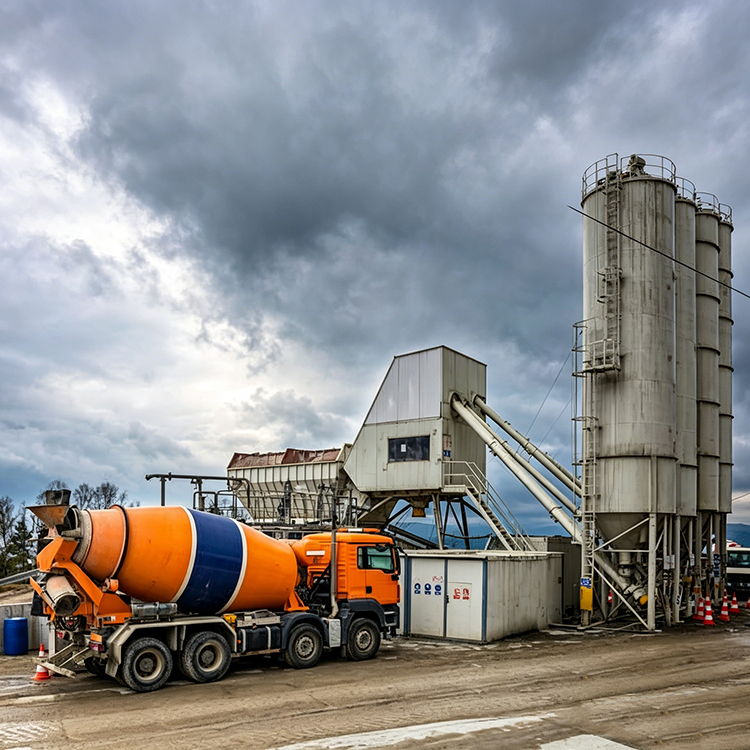
Water, Admixture, and Control Systems
Precision Dosing
Water batching accuracy directly controls concrete slump and water-cement ratio — the two parameters that most influence compressive strength. A ready mix concrete plant uses a weigh-batched water system with a holding tank, pump, and weigh hopper rather than a flow meter alone. Weigh batching provides ±0.5% accuracy versus ±2-3% for turbine flow meters subject to line pressure fluctuations.
Admixture dosing requires dedicated pumps and stainless steel or polyethylene storage tanks for each admixture type — water reducer, superplasticizer, retarder, accelerator, and air-entraining agent. Each admixture is dosed to a separate weigh vessel before being flushed into the mixer with part of the batch water. Cross-contamination between admixture lines causes unpredictable set-time and slump interactions that are difficult to diagnose in the field.
The plant control system sequences all these subsystems — aggregate gates, cement feeders, water and admixture pumps, and mixer discharge — through a programmable logic controller with batch records stored for quality traceability. Moisture probes in the aggregate bins provide real-time water content data so the controller adjusts batch water automatically, compensating for aggregate moisture variations from rainfall or stockpile drainage.
Plant Layout Considerations
Site layout for a ready mix concrete plant must accommodate truck flow in three zones: raw material delivery (aggregate trucks and cement tankers), internal material transfer (loader movements between stockpiles and bins), and finished concrete dispatch (ready-mix trucks queuing under the mixer discharge point). Cross-traffic between any two of these zones creates congestion that reduces daily throughput.
Frequently Asked Questions
What are the essential components of a ready mix concrete plant?
A complete ready mix concrete plant includes five core systems: aggregate storage and batching (compartment bins with weigh hoppers), cementitious material storage (silos with aeration and screw conveyors), a mixing unit (twin-shaft or planetary), water and admixture dosing (weigh-batched with dedicated pumps), and a PLC-based control system with batch recording capability.
How many cement silos does a ready mix concrete plant need?
A minimum of two silos supports OPC and one supplementary cementitious material. Plants producing high-performance or specialized concrete with ternary or quaternary binder blends — incorporating fly ash, slag, and silica fume — require three to four silos to maintain material segregation and avoid cross-contamination between incompatible cementitious materials.
What mixer type is best for a high-volume ready mix concrete plant?
Twin-shaft horizontal mixers deliver the highest throughput (60-180 m³/h) with mix cycles of 35-50 seconds and excellent homogenization for standard RMC grades. Planetary mixers provide more intensive mixing action suited to high-strength and specialized concrete but operate at lower throughput per unit, making them more common in precast rather than high-volume ready-mix operations.
How accurate is aggregate batching in a modern ready mix plant?
Load cell weighing on individual aggregate bin gates achieves ±1% accuracy per fraction. Moisture probes in aggregate bins feed real-time data to the control system, which adjusts batch water automatically to maintain target water-cement ratio regardless of aggregate moisture variation from weather or stockpile conditions.
What admixture dosing equipment is needed in a ready mix concrete plant?
Each admixture type requires a dedicated dosing pump, stainless steel or polyethylene storage tank, and independent weigh vessel. Typical RMC plants dose four to six admixture types — water reducer, superplasticizer, retarder, accelerator, air-entraining agent, and viscosity modifier. Shared lines between incompatible admixtures cause chemical interactions that ruin entire batches.
How is a ready mix concrete plant laid out for efficient truck flow?
The layout separates three traffic zones: raw material receiving (aggregate trucks and cement tankers at the rear), internal material transfer (loader movements alongside the bins), and finished concrete dispatch (ready-mix trucks queuing in a one-way loop under the mixer). Cross-traffic between zones reduces daily production capacity by creating queuing delays at shared access points.