 EN
EN


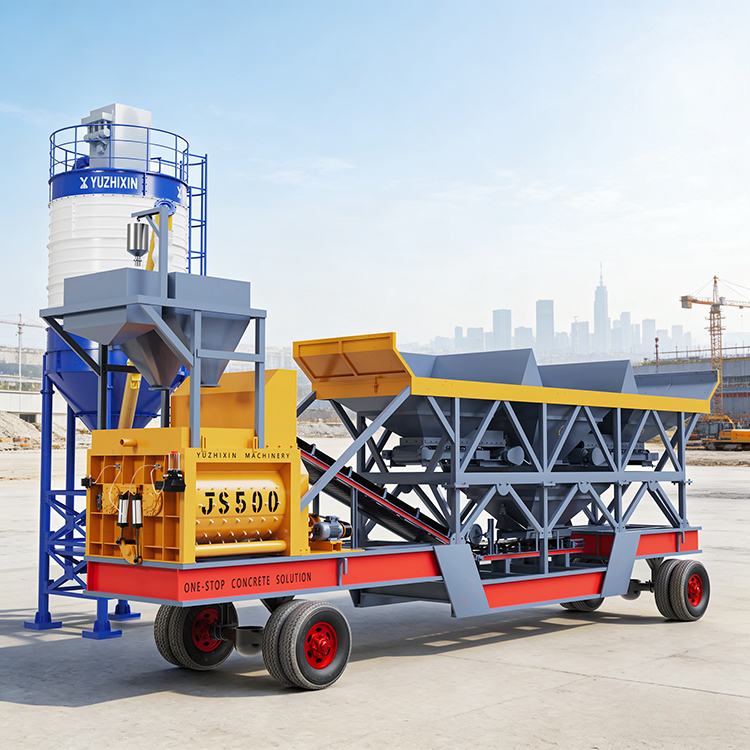
A standard mini concrete batching plant usually ships within 20 to 35 days from a ready stock, once the deposit and confirmed layout clear. Requesting the unit with stocked parts keeps the build short. The clock starts at factory acceptance, not at the port. Buyers who treat delivery as a single number miss the build, test, and document steps that sit between the order and the flatbed.
A Philippines Contractor Received a 35 m³/h Unit in 26 Days
What the Quote Actually Covered
One Southeast Asian contractor ordered a 35 m³/h mini concrete batching plant on a skid-mounted frame for a rural bridge approach. The supplier held the mixer, bins, and control cabin in stock, so the build phase ran only nine days: fit-out, wiring, and a water-batch trial. That mini concrete batching plant needed no civil foundation, which also cut on-site days. The remaining seventeen days covered crating, terminal handling, and ocean transit to a nearby port, with customs cleared before the truck arrived. The bridge opened two weeks ahead of the rural schedule, and the crew reused the same skid on a second approach the next season.
How a Mini Concrete Batching Plant Is Built and Tested
The Compact Skid Layout
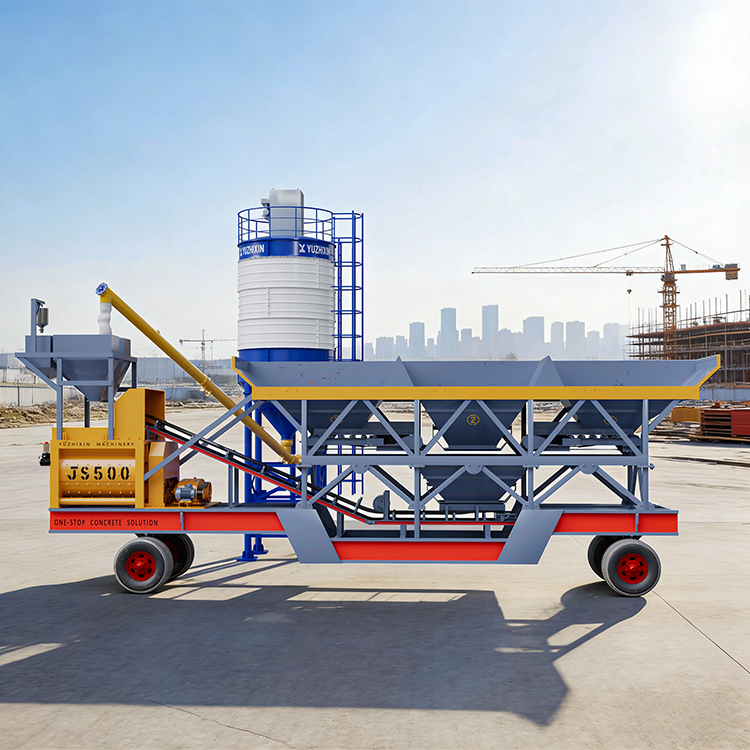
A mini concrete batching plant packs the twin-shaft mixer, two or three aggregate bins, a cement screw, and the operator cabin onto one compact skid. Because the footprint stays under a standard container width, the plant skips the welded-on-site assembly that stretches lead time for larger lines. Field crews report that a single forklift sets the frame, since crane time drops to under an hour versus a day for welded lines. Most buyers pick this skid exactly for its container-ready width, since it travels as one crate and lands ready to wire.
Factory Run-Test Before Crating
A mini concrete batching plant leaves the workshop only after a no-load and a water-batch run. Technicians weigh each aggregate fraction, spin the mixer, and read the load cells against a calibrated master. A mini concrete batching plant that fails the trial never reaches the crate, so faults surface in the bay, not on the site. Yuzhixin Machinery logs this trial on the job card, and the crated unit ships with that record for the buyer to check on arrival.
What Paperwork and Standards Affect the Timeline
Documentation That Clears Customs
A mini concrete batching plant moves across a border on paper as much as on a ship. The commercial invoice, packing list, and bill of lading must name the HS code and weight exactly, or the cargo sits in a bonded yard. The same mini concrete batching plant may need extra certificates for Gulf ports, so the documents should list every mark the destination now requires. CE marking eases EU entry, while a mill certificate and ISO 9001 record satisfy most African and Asian ports without a second inspection queue.
Electrical and Safety Marks
A mini concrete batching plant must carry the right enclosure rating for the destination climate. ANSI/NFPA 70 frames the panel design for North American buyers, and OSHA 29 CFR 1910.212 drives guard placement on shafts and belts. Getting these marks wrong sends the unit back for rework, which can add three weeks that no one budgeted. Confirm the standard before the build starts, because retrofitting a panel after crating is rarely possible. A pre-agreed voltage also avoids a transformer rental on site, which otherwise sits as a hidden cost on the critical path.
How to Shorten Delivery and Protect the Schedule
Choosing Stocked Configurations
A mini concrete batching plant in a standard 25 to 60 m³/h class ships fastest because the maker keeps the core skid built. Custom bin counts, special silo heights, or a non-standard voltage stretch the build by two to four weeks. Buyers who accept the catalogue layout and a 380 V or 415 V panel usually take delivery inside the 20 to 35 day window without a premium surcharge, and they trade little function for the saved calendar.
Pre-Shipment Inspection Steps
A mini concrete batching plant deserves a third-party check before crating, not after. A short video call at the factory shows the mixer spin, the belt track, and the control screen on a live recipe. Ask for the run-test card and photos of the load-cell zeros. Catching a miswired conveyor before sail saves the four-week round trip that a fault discovered on site would force, and it protects the project start date from a single loose terminal. Booking the inspection at the factory, not the port, also keeps the document pack consistent with the unit the buyer actually receives.
Site Readiness Before Arrival
A mini concrete batching plant earns its speed only if the pad waits. Level compacted ground, a power drop within cable reach, and a clear crane or forklift path let the crew set the skid the day it lands. A Vietnam job took a 60 m³/h unit from trailer to first batch in three days because the laydown area and generator were staged the week before, not sourced after the ship docked at the quay.
A mini concrete batching plant rewards planning more than patience. The 20 to 35 day window holds for stocked, standard-voltage units with clean paperwork; custom work and missing documents push it out. Lock the layout, confirm the marks, and stage the site, and the mixer meets the schedule instead of the schedule waiting on the mixer.
Frequently Asked Questions
Question
What shortens the delivery of a mini concrete batching plant most?
Answer
Stocked, standard-voltage configurations shorten delivery the most, because the maker already holds the mixer, bins, and cabin built. A unit in this class typically leaves within 20 to 35 days when the layout and marks are confirmed at order. Clean customs papers and a staged site protect that window from both ends of the trip.
Question
Why do custom options add weeks to the build?
Answer
Custom bin counts, odd silo heights, or a non-standard voltage force a fresh fabrication run instead of pulling a finished skid. The maker must cut steel, rewire the panel, and re-test, which adds two to four weeks before crating. Buyers who accept the catalogue layout trade little function for a saved calendar, and they avoid the premium surcharge that custom work usually carries on top of the delay.
Question
How is the unit tested before it ships?
Answer
Technicians run a no-load spin and a water-batch trial, weighing each aggregate fraction and reading the load cells against a calibrated master. The mixer and belt are checked for tracking and noise before the unit is crated. Yuzhixin Machinery logs the trial on a job card that ships with the plant, so the buyer can confirm on arrival that the skid passed before it left the bay.
Question
Can the plant arrive ready to batch on day one?
Answer
Yes, when the site is staged and the run-test passed at the factory. A tested skid needs only levelling, power, and a recipe load before the first batch. Units that skip the pre-shipment check often need a week of fault-finding instead. A Vietnam job ran a 60 m³/h unit from trailer to first pour in three days because the pad and generator were ready before the ship docked.
Question
Where should the laydown area sit for fast setup?
Answer
Place the laydown area on level compacted ground within cable reach of the power drop and clear of the excavation edge. A straight crane or forklift path to the trailer saves hours on set day. Keep the control cabin face clear and upwind of dust. A tidy, staged pad lets the crew set the skid the day it lands instead of sourcing equipment after the vessel berths.
Question
Do overseas buyers need CE or ISO papers for clearance?
Answer
Most do, though the exact set depends on the port. CE marking eases EU entry, while a mill certificate and ISO 9001 record satisfy many African and Asian customs without a second queue. Gulf ports may ask for extra certificates, so the documents should list every mark the destination requires. Wrong or missing papers can hold the cargo in a bonded yard for weeks past the delivery window.