 EN
EN


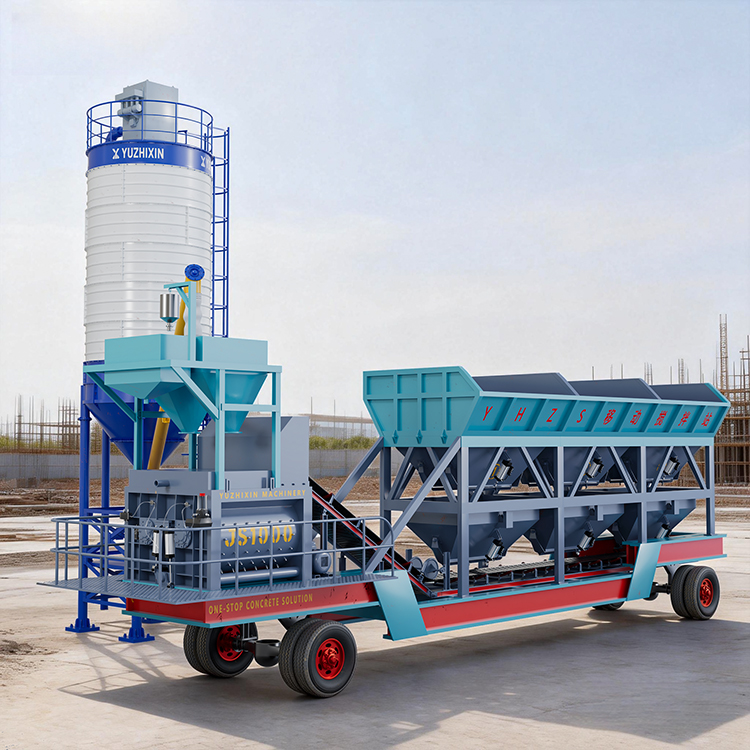
A mobile concrete batching plant earns its place on jobs that will not sit still. A county road crew in a hilly district faced a 14 km stretch of resurfacing with no ready-mix supplier closer than 90 minutes away. Trucking fresh concrete over winding grades meant slump loss and rejected loads. The team needed output on the ridge, not in a distant yard, and a movable unit answered that gap directly. Renting a mobile concrete batching plant shifts spend from long hauls to on-site output.
A Mountain-Road Crew Cut Setup From Three Weeks to Four Days
Why a Fixed Plant Lost the Contract
A fixed plant was quoted first, yet the civil works ran only eleven weeks. Pouring a mobile concrete batching plant against that timeline looked wrong on paper: a permanent foundation, crane hire, and a concrete pad would eat three weeks before the first cubic metre. The owner walked away from that bid. By contrast, the movable plant needs no poured slab, so the eleven-week window stays clear. A short job cannot carry a long startup tax, and idle steel after demobilization only deepens the loss.
How the Mobile Unit Rewrote the Schedule
The crew instead ran a trailer-mounted unit rated at 60 m³/h. A mobile concrete batching plant arrived on two flatbed trucks, leveled on compacted gravel, and produced spec concrete by day four. Haul distance dropped from 90 minutes to 90 seconds. Rejected loads fell to near zero because mix left the mixer and met the paver within minutes, holding slump that a distant drum could never protect across the pass. That mobile concrete batching plant also left no foundation to break at closeout.
How a Mobile Concrete Batching Plant Mixes on the Move
The Twin-Shaft Mixing Core
A mobile concrete batching plant relies on a twin-shaft forced mixer for uniform texture in 30 to 45 seconds. Two counter-rotating shafts throw the charge through the centre, so every aggregate meets cement and water evenly. A mobile concrete batching plant holds that evenness because the shafts never let a dry pocket form. That shear matters when moisture swings between morning and afternoon on an open site. The result holds slump without extra water, which protects compressive strength and keeps cube tests inside the specified band.
Integrated Weighing and Conveying
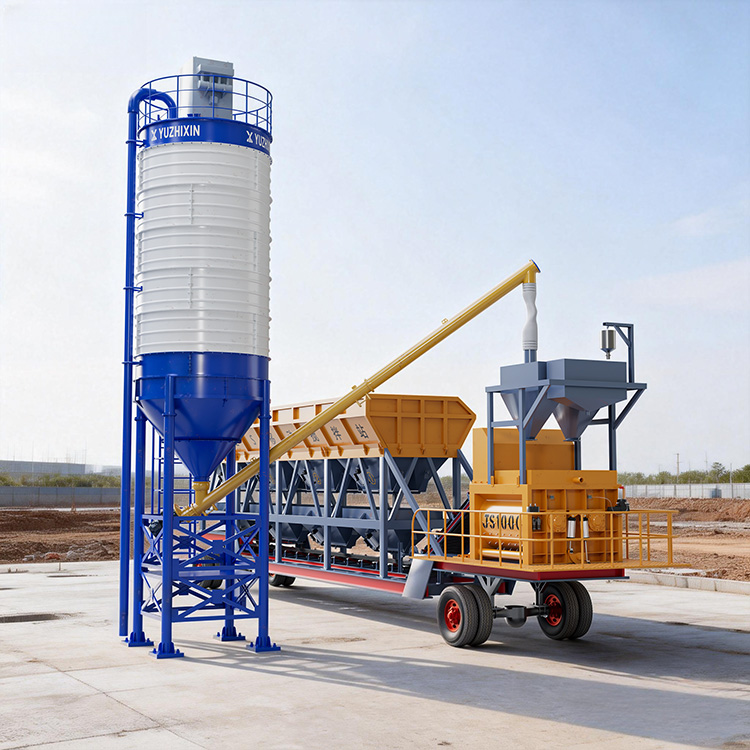
A mobile concrete batching plant carries its own aggregate bins, belt weigh system, and screw conveyors for cement. Load cells read each fraction to within 1% before discharge. Because everything travels as one skid, calibration stays put between moves. Most makers rate the unit by hourly, not daily, throughput, so operators set a recipe once and the controller repeats it shift after shift, holding tolerance without re-zeroing at every relocation. A buyer weighing the movable plant against a fixed line notices the saved crane and pad.
What Global Standards Expect From a Movable Plant
Electrical, Guarding and Dust Limits
A mobile concrete batching plant must meet the same safety bar as a fixed one. ANSI/NFPA 70 drives the electrical enclosure rating for outdoor panels, while OSHA 29 CFR 1910.212 expects guarding on every rotating shaft and belt. ISO 8970 frames dust control at the cement inlet, and ISO 9001 covers the production system behind the machine. Sites that skip these checks risk stop-work orders, not just fines, once an inspector walks the layout. A mobile concrete batching plant that ships with listed panels and tagged guards passes the walk-through without rework.
How to Specify, Inspect and Maintain the Unit
Matching Capacity to the Real Job
A mobile concrete batching plant should be sized to peak hourly demand, not daily total. A 90 m³/h rating sounds generous until a pump truck waits at 8 a.m. Match bin count to the aggregate grades on site, and confirm the cement screw reaches the silo height. Yuzhixin Machinery supplies a 30–240 m³/h range, which covers most temporary civil jobs without oversizing the footprint or the power draw that a bigger skid would demand. A 60 m³/h mobile unit suits most county road packages without a second unit.
Permit Pressure on Temporary Sites
A mobile concrete batching plant still triggers local rules on noise, dust, and wheel-wash at the gate. Some districts class a movable plant as temporary equipment and waive foundation approval, while others treat it as fixed the moment concrete is poured. Confirm the permit path before the trucks roll, or the unit may sit unused under a stop-work notice that costs more than the hire itself across an eleven-week window.
Pre-Start Checks and Daily Care
A mobile concrete batching plant rewards a short routine. Verify load cells zero, check belt tracking, and listen for conveyor bearing noise each morning. Grease the mixer shafts on the maker's hour meter. A Cambodia site running a YHZS60 logged 60 m³/h for two seasons with only filter and seal swaps, because the crew logged pre-start checks on a single card and acted on the first odd sound from the drive. Keep a spare set of bearings and seals on site, because a stopped mixer delays the whole paving train.
A mobile concrete batching plant turns a moving job into a controlled one. Short civil works, remote mines, and disaster repair all gain from output that travels with the crew. The edge is not a lower sticker—it is fewer rejected loads, a faster first pour, and a clean exit when the contract ends, with no slab to break and no pad to abandon on site.
Frequently Asked Questions
Question
What job types gain the most from a mobile concrete batching plant?
Answer
Remote road works, mine sites, and disaster repair gain the strongest return because haul distance falls from hours to minutes. A movable unit also suits eleven-week civils where a fixed foundation would cost more than the pour. Contractors bidding short, scattered packages should weigh rejected-load savings against hire before choosing a permanent plant that may sit idle after demobilization.
Question
Why does a fixed plant suit long runs better than short ones?
Answer
A fixed plant spreads its foundation, crane, and pad cost across years of output, so the startup tax shrinks per cubic metre. On an eleven-week job that same tax dominates the budget and leaves idle steel at closeout. Permanent plants also hold higher hourly rates and deeper silo capacity, advantages that only pay back when the mixer runs nearly every day for many months without relocation.
Question
How is the unit transported between sites?
Answer
Most trailer-mounted units travel on two flatbed trucks with the mixer, bins, and control cabin as one skid. Crews level the frame on compacted gravel, connect power, and zero the load cells before the first batch. Because calibration stays fixed to the skid, relocation takes hours rather than weeks. A 60 m³/h unit typically reaches spec output by day four after arrival at a prepared laydown area with access for deliveries.
Question
Can the unit hold mix accuracy in heat?
Answer
Yes, when moisture compensation stays active. The controller adjusts water against the aggregate moisture probe, so afternoon heat that dries the bin still lands the target slump. Twin-shaft shear keeps texture even without extra water, which protects strength. Sites in hot zones should shade the cement screw and log cube tests twice daily, because a drifting slump fails more loads than any distance ever could.
Question
Where should the unit sit for safe daily operation?
Answer
Place the skid on compacted, drained ground clear of the excavation edge and upwind of the camp. Keep the wheel-wash and dust curtain at the gate, and fence the rotating mixer from foot traffic per OSHA guarding rules. The control cabin should face the paver for a clear line of sight. A level pad also protects load-cell accuracy, because a tilted frame reads weight wrong and skews every batch leaving the plant.
Question
Do temporary sites need the same dust permits as fixed plants?
Answer
Often yes, even when the structure is movable. Inspectors judge output and emission, not wheels, so a cement inlet still triggers ISO 8970 dust control and local limits. Some districts waive only the foundation approval, not the air or noise rules. Confirm the full permit path before mobilization, because a stop-work notice on a short job can erase the speed advantage that justified the mobile plant in the first place.