 EN
EN


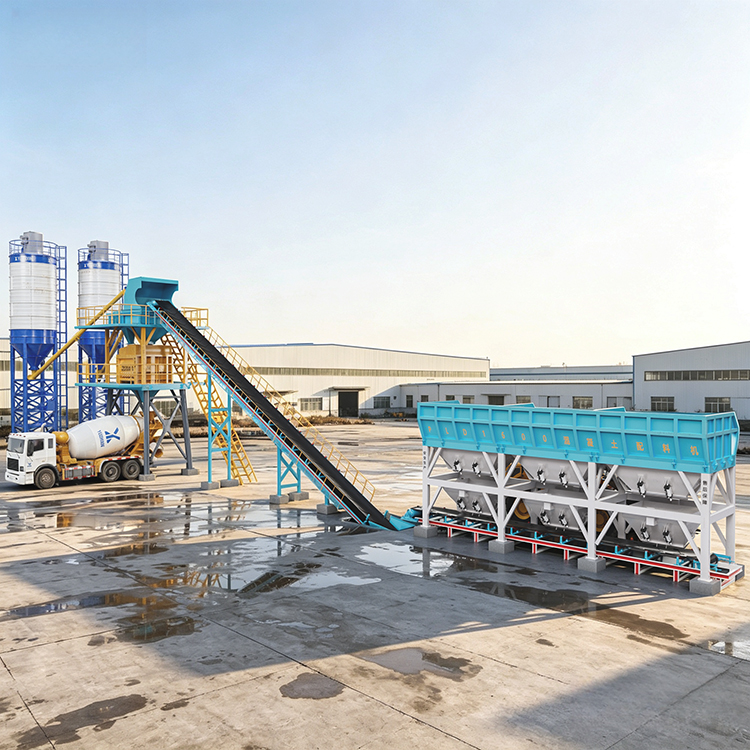
Can Stationary Concrete Batching Plants Run 24/7?
A stationary concrete batching plant serving a major dam construction project in Southeast Asia operated continuously for 17 months — 24 hours per day, seven days per week — producing over 480,000 cubic meters of concrete without a single unplanned production stoppage exceeding four hours. The plant achieved this by design: twin mixers providing full redundancy, duplicate cement screw conveyors on each silo, and a maintenance crew permanently assigned to the night shift for preventive work during lower-demand hours.
The question is not whether a stationary concrete batching plant can operate continuously — properly engineered plants do so routinely. The question is what design features and operational disciplines make continuous production reliable rather than risky.
The Engineering Requirements
Redundancy Design
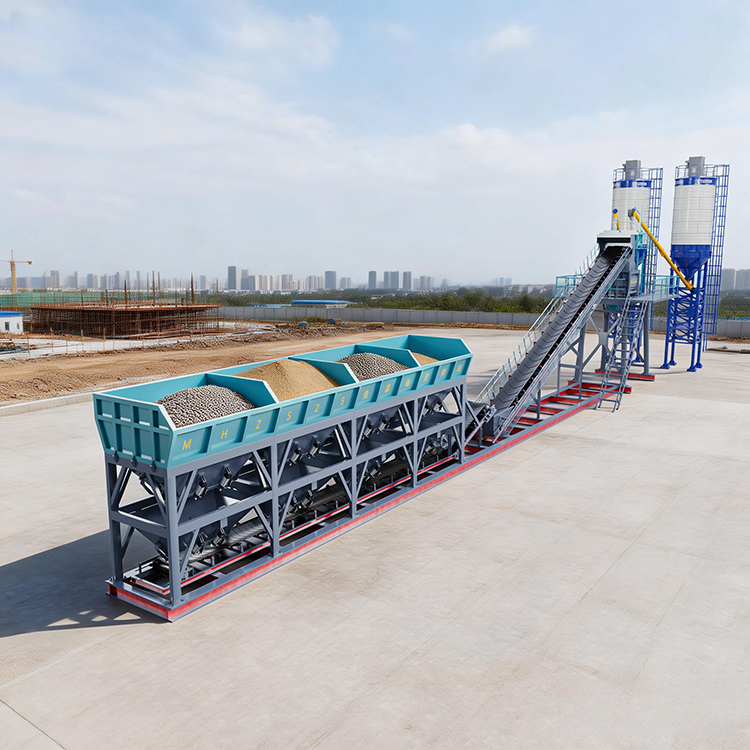
A plant designed for single-shift operation can tolerate a failed component repaired overnight. A plant committed to 24-hour production cannot. The critical redundancy in a continuous-duty stationary concrete batching plant starts with the mixer. Twin mixers — either two independent units sharing aggregate and cement supply or a single twin-host configuration with two mixing troughs — allow production to continue at 50-70% of rated capacity during maintenance, repairs, or cleanout on one unit.
Cement supply redundancy is equally critical. Each silo should have at least two independent discharge paths — dual screw conveyors or a screw conveyor plus a backup pneumatic conveying line — because a failed cement feed stops production immediately. Aggregate bin gates with individual actuators rather than a common drive system prevent a single gate failure from blocking an entire fraction. Load cells on independent weigh hoppers rather than shared units isolate calibration drift to individual materials.
The control system for a continuously operating stationary concrete batching plant requires an uninterruptible power supply (UPS) to maintain PLC operation and batch data through brief power interruptions, plus a manual override capability allowing experienced operators to batch concrete using preset recipes if the automation system fails.
Thermal Management
Continuous operation means motors, gearboxes, and hydraulic systems never cool to ambient temperature. A stationary concrete batching plant running 24 hours accumulates heat in every drivetrain component. Mixer gearbox oil temperature stabilizes 15-25°C above ambient during continuous operation — within acceptable limits for synthetic gear oils rated to 90-100°C but requiring verification through weekly temperature logging. Hydraulic power units for mixer discharge doors and bin gates may need oil coolers if oil temperature exceeds 65°C during extended summer operation.
Operational Logistics
Maintenance Without Shutdown
A continuously operating stationary concrete batching plant cannot wait for a convenient Sunday shutdown. Preventive maintenance integrates into the production schedule through staggered routines. Daily inspection and lubrication occur during crew shift changes — the 15-30 minute overlap between outgoing and incoming crews provides a natural maintenance window. Weekly wear-part measurement happens during the night shift when production demand is typically 40-60% of daytime peak, allowing one mixer to be taken offline without missing delivery commitments.
Critical spare parts inventory for continuous operation must be deeper than for single-shift plants. A full set of mixing arms and blades, at least two spare trough liner plate sets, complete shaft seal assemblies for both shafts, and spare drive belts or couplings must be on the shelf — ordering parts after a failure during a 24-hour operation means 24-72 hours of compromised production waiting for delivery.
Raw Material Supply
Night-shift aggregate delivery requires planning. Stockpiles must be topped up during daylight when quarry and transport operations are active, with sufficient reserve for 10-14 hours of overnight production — approximately 600-900 tonnes for a 60 m³/h plant. Cement deliveries follow similar logic, with silo level monitoring tied to an automatic reorder threshold that accounts for the 6-12 hour lead time on cement tanker dispatch during overnight hours.
Reliability Data
Well-maintained stationary concrete batching plants in continuous operation achieve mechanical availability of 90-95% — meaning the plant is available to produce concrete during 90-95% of scheduled operating hours. The 5-10% downtime includes planned maintenance, scheduled mixer cleanout, and aggregate bin refilling during production pauses. Unplanned downtime from component failure typically represents less than 2% of operating hours in plants with disciplined preventive maintenance programs.
Frequently Asked Questions
Can a stationary concrete batching plant really operate 24 hours without stopping?
Yes. Industrial stationary plants with redundant mixers, cement feeds, and control systems achieve mechanical availability of 90-95% in continuous operation. The key engineering requirement is eliminating single points of failure — a single mixer, a single cement screw conveyor per silo, or a single PLC without UPS backup will eventually cause a stoppage during 24-hour operation.
What redundancy does a stationary concrete batching plant need for 24/7 operation?
Dual mixers (or a twin-host configuration), dual cement discharge paths per silo, individually actuated aggregate bin gates, independent load cells per weigh hopper, UPS backup for the control system, and spare parts inventory covering all critical wear components at the plant site. Without these redundancies, continuous operation is possible but not reliable.
How is maintenance performed on a stationary concrete batching plant running continuously?
Maintenance integrates into production through staggered scheduling. Daily lubrication during shift changes. Weekly inspections during night-shift lower-demand periods when one mixer can be taken offline. Major overhauls planned during known seasonal production dips. The maintenance team must be staffed for all shifts, not just daylight hours.
Does continuous operation increase wear on batching plant components?
Continuous operation accumulates wear hours faster but does not inherently increase wear rate per operating hour. Thermal stress on gearboxes and hydraulic systems is slightly higher because components never cool to ambient temperature. Oil analysis and temperature monitoring provide the data to confirm that operating temperatures remain within design limits for continuous duty.
How are raw materials supplied to a stationary concrete batching plant at night?
Aggregate stockpiles are filled during daylight shifts with 10-14 hours of overnight inventory reserve — approximately 600-900 tonnes for a 60 m³/h plant. Cement silos use continuous level monitoring with automatic reorder thresholds accounting for the lead time on cement tanker dispatch. Reliable supplier relationships with confirmed after-hours delivery capability are essential.
What control system features are needed for 24-hour stationary concrete batching plant operation?
UPS backup for PLC and batch recording, manual override capability for batching without automation, remote monitoring with alarm notification to off-site maintenance personnel, and automatic batch data logging for quality traceability across all shifts. The control system should log every alarm and operator intervention for post-shift review by the quality manager.