 EN
EN


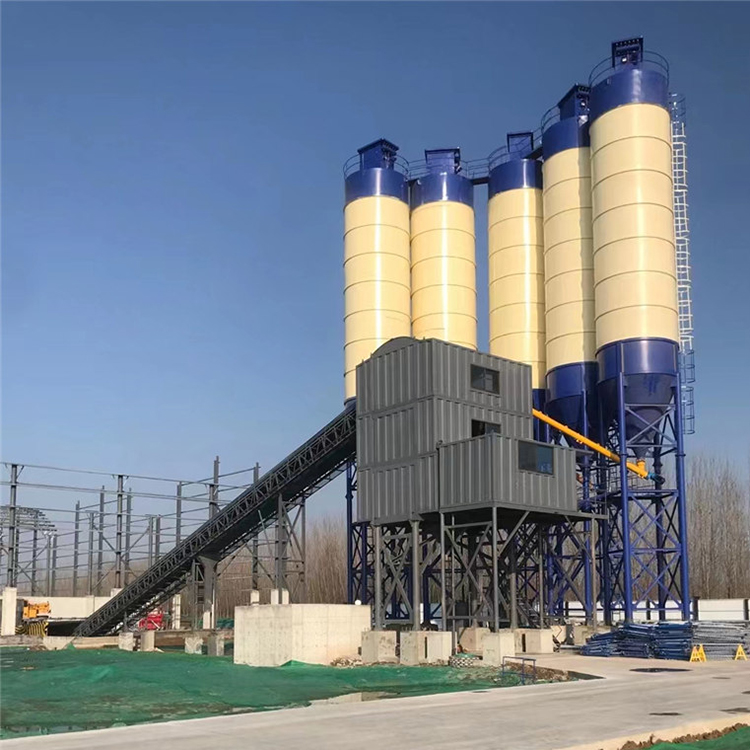
Concrete Batching Plant Capacity for Road Projects
A highway contractor in Southeast Asia underestimated the pour rate needed for a 45-kilometer expressway section. The 60 m³/h concrete batching plant specified during planning could not sustain the 85 m³/h peak demand when slipform pavers operated at full speed across two lanes simultaneously. The shortfall forced the contractor to supplement with ready-mix trucks from a commercial plant 40 kilometers away, adding $12 per cubic meter in transport costs and creating cold joints that required expensive remedial grinding. The lesson was clear: road project plant sizing must match peak pour rate, not average daily output.
Road construction places unique demands on a concrete batching plant — linear site geometry, moving work fronts, continuous paving trains, and strict slump retention windows. Selecting the wrong capacity creates either costly idle equipment or production gaps that compromise pavement quality.
How Road Project Scale Determines Plant Capacity
Highway and Expressway Projects: 90-180 m³/h
Major highway and expressway construction uses slipform pavers that lay concrete at 0.8 to 1.5 meters per minute across lane widths of 7.5 to 12 meters. At 300-millimeter pavement thickness, a single paver consumes 50-70 m³/h of concrete — and projects running two pavers in parallel need double that supply. A concrete batching plant serving highway paving operations must deliver a minimum of 90 m³/h of compacted output, with 120-180 m³/h recommended for projects exceeding 30 kilometers where lost production time cannot be recovered later.
These high-output plants operate as twin-host configurations — two mixing units sharing aggregate bins, cement silos, and a control system — providing redundancy if one mixer requires maintenance during critical paving windows. The aggregate storage requirement scales with output: a 120 m³/h plant running 10-hour shifts consumes approximately 960 tonnes of aggregate daily, requiring multiple compartment bins with rapid loader access.
Urban and Municipal Road Projects: 25-75 m³/h
Urban road construction involves shorter segments, frequent intersections, utility crossings, and restricted working hours that prevent continuous paving. A concrete batching plant sized at 25-60 m³/h handles most municipal work — four-lane arterial roads, residential streets, bus lanes, and intersection reconstruction. The limiting factor is typically aggregate delivery frequency rather than mixer capacity, as urban sites rarely accommodate large aggregate stockpiles.
Bridge deck overlays, roundabout construction, and concrete bus pads require even less sustained output — 15-25 m³/h from a compact mobile plant or foundation-free unit that can be relocated between short-duration pours. These small-footprint plants eliminate the concrete transit time that can cause slump loss on congested urban delivery routes.
Why Mobility Matters as Much as Output
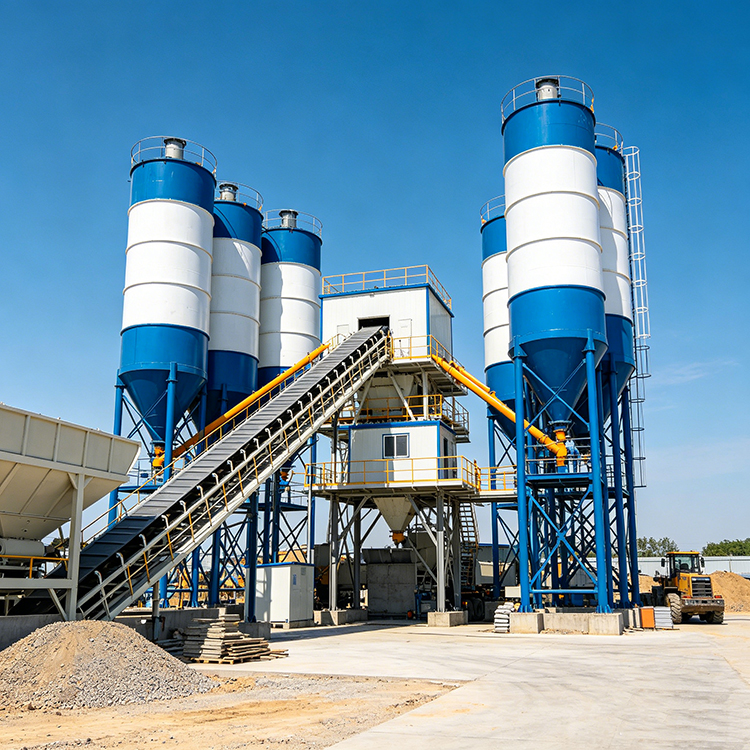
Road construction advances linearly — the work front moves kilometers per week. A stationary plant fixed at one location requires an expanding ready-mix truck fleet as haul distances increase. Mobile or modular concrete batching plant configurations allow relocation every 15-25 kilometers along the alignment, maintaining haul distances under 30 minutes to prevent premature concrete setting.
Foundation-free plants with integrated cement silos and aggregate bins on a single chassis set up in four to six hours at a new location — versus two to three weeks for a stationary plant foundation and erection. For a 100-kilometer highway project, maintaining three to four mobile plant positions along the route cuts total truck-kilometers by 40-60% compared to a single fixed plant.
Matching Aggregate Storage to Paving Schedules
Road paving operates on tight quality windows — concrete must be placed within 60-90 minutes of batching depending on ambient temperature and admixture dosage. A plant that runs out of a specific aggregate fraction mid-pour stops the paving train, creating a cold joint at the paver. Compartmented aggregate bins with live-bottom feeders provide the segregation-free storage needed for precise mix proportions throughout continuous pours.
Frequently Asked Questions
What concrete batching plant capacity do I need for a 50 km highway?
A twin-host plant configuration rated at 120-150 m³/h compacted output handles single-paver operations on projects of this scale. Two pavers running simultaneously require 180 m³/h or two separate 90-120 m³/h plants positioned at intervals along the alignment to maintain haul distances within 30 minutes.
Why does road construction need higher capacity plants than building construction?
Road pavers consume concrete continuously at high rates — a slipform paver at full speed uses 50-70 m³/h, while a typical building column or slab pour is intermittent. Concrete for pavement also has shorter working time due to low water-cement ratios specified for durability, making uninterrupted supply essential to avoid cold joints between adjacent pours.
Should road projects use mobile or stationary batching plants?
Linear projects exceeding 30 kilometers benefit from mobile or modular plants relocated along the alignment to maintain reasonable haul distances. Stationary plants suit urban projects within a fixed radius or highway sections where a central location serves the entire alignment through an efficient truck fleet within 30-minute delivery windows.
How many cement silos does a road project concrete plant need?
High-output plants for highway work typically require two to four silos — separate storage for OPC (Ordinary Portland Cement) and supplementary cementitious materials like fly ash or slag specified in pavement mix designs. Bolted silos in 100-tonne and 150-tonne configurations provide the capacity and transportability needed for project-site installation.
What aggregate bin capacity is needed for continuous road paving?
Compartmented bins with 15-25 m³ per fraction support one to two hours of continuous production at 120 m³/h. Projects with unreliable aggregate supply require larger bins or ground stockpile areas with loader access to refill bins during production without interrupting batching cycles.
How does ambient temperature affect batching plant capacity selection?
High ambient temperatures accelerate cement hydration, reducing the allowable delivery and placement window from 90 minutes to as little as 45 minutes at 35°C. Plants in hot climates may need 20-30% higher rated capacity than temperate-region equivalents to compensate for shorter effective working time and the need for chilled water or ice-flake batching systems.