 EN
EN


Navigating Foundation Realities for Mobile Batching Units
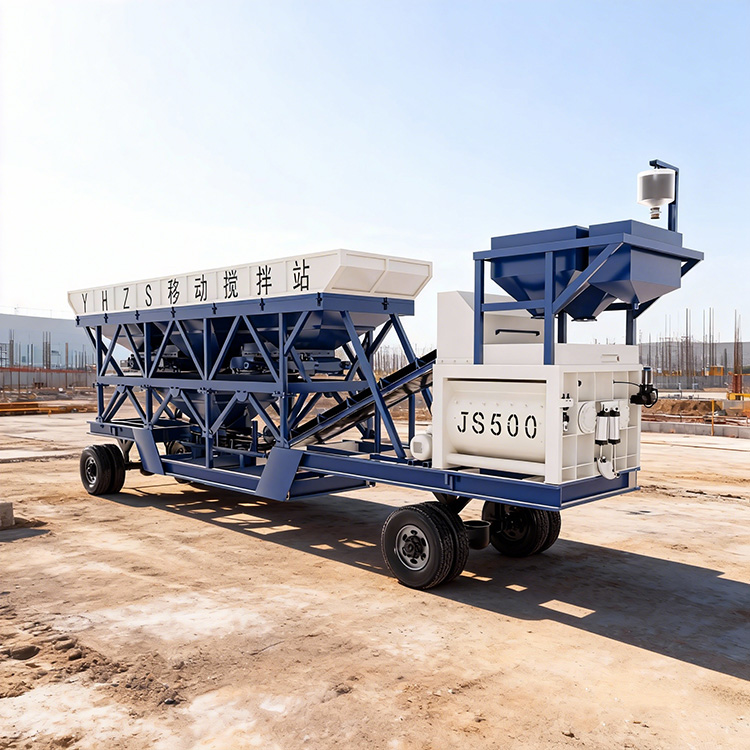
When managing fast-paced civil engineering and remote construction jobs, project managers constantly look for ways to accelerate setup times without compromising structural integrity. A frequent question raised by site supervisors involves whether a portable concrete batching plant requires a permanent concrete foundation before operation. Having spent years coordinating equipment deployments across varying terrain, the short answer is that while traditional plants demand extensive civil work, modern mobile configurations are engineered to operate efficiently with minimal ground preparation, though site conditions ultimately dictate the final setup approach.
Engineering Insights Into Soil Mechanics and Load Distribution
Understanding the structural mechanics of a portable concrete batching plant reveals why heavy-duty permanent foundations are frequently unnecessary. Unlike stationary batching installations that require deep concrete piers to anchor massive vertical structures, mobile units feature an integrated chassis design. This integrated framework distributes the operating weight of aggregate bins, mixing drums, and cement silos evenly across a broader surface area. According to structural engineering guidelines published in industrial construction manuals, distributing dynamic loads across a reinforced steel chassis significantly reduces localized ground pressure. Consequently, compact soil, compacted gravel pads, or heavy-duty steel ballast plates often provide adequate support for high-output mixing cycles.
| Plant Configuration | Civil Work Requirement | Average Setup Duration | Foundation Investment |
| Stationary Batching Plant | Deep concrete pours, anchor bolts, curing time | 3 to 6 weeks | High capital expense |
| Portable Concrete Batching Plant | Compacted gravel base or steel skids | 1 to 3 days | Minimal site preparation |
Contrasting Setup Demands Across Plant Models
Evaluating project timelines requires a clear understanding of how different batching systems interact with job site preparation. Stationary plants demand extensive civil engineering, soil testing, and weeks of concrete curing before any mechanical components can be mounted. In contrast, deploying a portable concrete batching plant bypasses these time-consuming delays. The pre-assembled modules arrive on wheeled chassis or heavy transport skids, allowing technicians to level the unit using adjustable support jacks on a compacted sub-base. This engineering advantage eliminates concrete curing bottlenecks, letting contractors transition from site arrival to active batch production within a matter of days.
Field Experience and Practical Ground Preparation Strategies
Field deployment experiences in diverse climates highlight that successful operation relies heavily on intelligent ground preparation rather than massive foundation blocks. During a remote infrastructure project in a challenging mountainous terrain, our engineering team utilized compacted crushed stone topped with heavy timber matting to stabilize a portable concrete batching plant. This approach prevented differential settlement during heavy rainy seasons while avoiding permanent environmental alterations. Industry experts recommend conducting a dynamic cone penetrometer test to verify soil bearing capacity before positioning the plant. Ensuring the ground can support at least 150 kilopascals of pressure guarantees seamless weighing accuracy and prevents mechanical misalignment during continuous mixing operations.
| Operational Metric | Traditional Stationary Plant | Mobile Plant Solution |
| Site Relocation Difficulty | Permanent installation; impossible to relocate economically | Modular breakdown; fully relocatable across projects |
| Permitting Complexity | Requires extensive permanent building permits | Generally classified as temporary industrial equipment |
| Return on Investment Period | Longer amortization due to high civil overhead | Rapid ROI driven by immediate job-site mobility |
Unlocking Commercial Value and Operational Agility
Beyond mechanical convenience, minimizing civil foundation work delivers profound commercial advantages for modern construction enterprises. Eliminating massive concrete pours slashes initial capital expenditures and removes project delays associated with municipal building permits for permanent structures. Contractors utilizing a portable concrete batching plant gain unmatched flexibility, easily relocating mixing assets from one regional job site to another as project demands shift. This agility reduces raw material transportation costs, guarantees fresh concrete delivery directly at the pour site, and drastically improves overall profit margins on tight construction schedules.
Advanced Manufacturing and Global Supply Chain Reliability
Achieving seamless mobile deployment requires precision manufacturing and robust component sourcing. Engineering durable structural chassis, high-torque twin-shaft mixers, and weather-resistant control cabins demands rigorous quality control standards. Mixerplant integrates advanced fabrication techniques with a globally responsive supply chain, ensuring that every portable concrete batching plant meets international safety and environmental compliance benchmarks. By combining rugged structural reliability with streamlined global logistics, Mixerplant empowers civil contractors worldwide to execute complex infrastructure projects with total confidence and operational efficiency.