 EN
EN


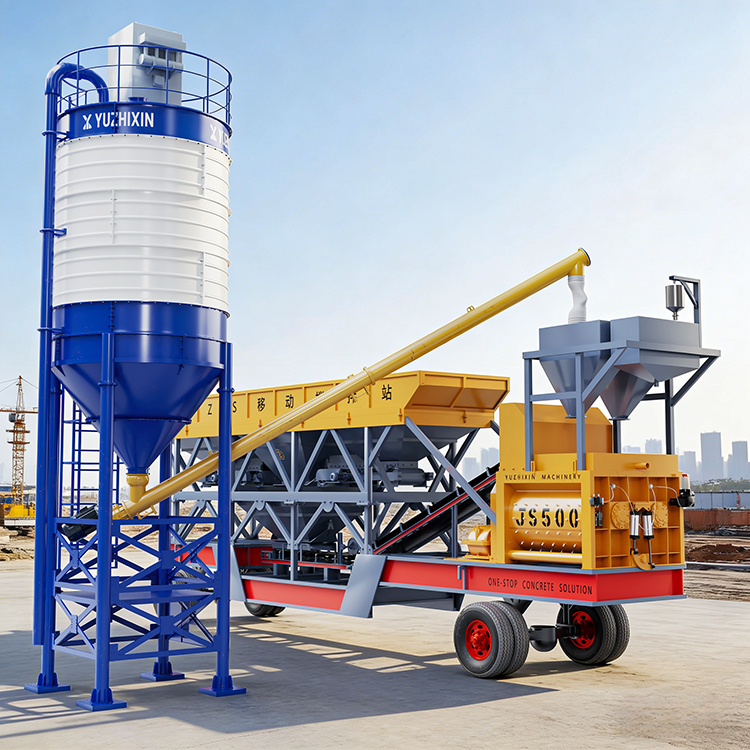
A portable concrete batching plant typically reaches its first batch in 8 to 14 hours when the site is staged, not the two to three days a fixed line needs. Booking a portable concrete batching plant with a pre-wired skid keeps the electrics short. The speed comes from a pre-wired skid that arrives level-ready, so crews skip the poured pad and the crane-heavy build. Setting the clock starts at trailer offload, not at the foundation permit.
A Dam Repair Crew Stood Up Output in 11 Hours
What Slowed the First Attempt
A reservoir repair crew first tried a portable concrete batching plant on bare ground with no power drop planned. The flatbed waited while the team dug a level pad by hand and ran cable 80 metres from the nearest panel. That portable concrete batching plant proved the pad mattered more than the model. That first attempt took two days and still limped, because the frame sat on uneven fill and the mixer tripped on a weak supply. The delay pushed the spillway pour past its weather window.
How the Second Try Hit Half a Day
The same portable concrete batching plant returned with a staged plan: a compacted pad, a 415 V drop at the fence, and a water tank on site. The portable concrete batching plant never waited on a cable pull this time. The crew set the skid before noon, zeroed the load cells, and ran a water-batch trial by mid-afternoon. Eleven hours after the truck arrived, the plant met the paver. The difference was not the machine — it was the ground, the power, and the water already waiting.
How a Portable Concrete Batching Plant Sets Up So Fast
The Pre-Wired Skid Advantage
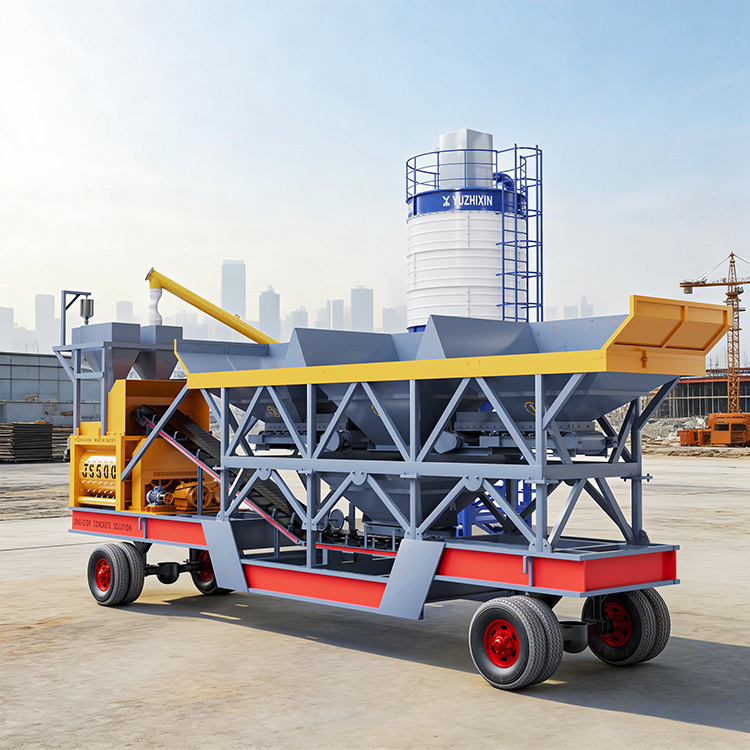
A portable concrete batching plant ships as one unit with cable trays, conduit, and the control cabin already wired at the factory. A portable concrete batching plant that ships wired also ships calibrated, which trims the start. Because the electrics are tested on the bench, the site only makes one mains connection and one earth. Large lines need electricians on site for days; a portable skid needs them for an hour. The saved labour is the real reason the setup fits inside a single shift instead of a week.
Level, Power, and First Batch
A portable concrete batching plant needs three things before the first batch: a level frame, a stable supply, and a water source. Most portable concrete batching plant buyers under-plan the water, not the steel. Laser-level the skid on compacted gravel, connect the drop, and fill the buffer tank. The controller loads a recipe, the screw feeds cement, and the twin-shaft mixer spins. Yuzhixin Machinery ships the unit with the run-test card from the factory, so the site repeats a known-good start rather than learning the machine from zero on a tight deadline.
What Standards Shape a Safe Setup
Grounding and Guarding On Site
A portable concrete batching plant must meet the same site bar as any fixed plant once it runs. ANSI/NFPA 70 drives the earthing and enclosure rating, and OSHA 29 CFR 1910.212 expects guards on every rotating shaft and belt before power goes on. ISO 9001 covers the build behind the skid. A poor earth or a missing belt guard can halt the whole job on the first inspection, which costs more time than the setup saved.
How to Plan, Inspect and Run the Setup
Staging the Site Before Delivery
A portable concrete batching plant earns its speed only when the laydown is ready at arrival. A plant on a bare pad is a delayed plant, full stop. Pour or compact a level pad, run the power drop to the fence line, and park a water tank within hose reach before the truck books. A crew that stages these three items turns a trailer into a working plant in one shift. Skip any one and the clock slips from hours into days, as the dam crew learned the hard way on attempt one.
Pre-Start Checks That Save Hours
A portable concrete batching plant rewards a tight pre-start routine on set day. Verify load cells zero, check belt tracking, confirm the screw turns free, and test the control screen on a live recipe before the first load. Grease the mixer shafts and log the readings. Catching a miswired conveyor or a stuck gate at offload saves the four-hour fault hunt that a skipped check forces later, when the paver is already waiting. A tagged lockout at the disconnect keeps the electrician safe during the check, and the signed card travels with the plant for the next site.
Keeping the Plant Stable After Move
A portable concrete batching plant stays accurate only if the frame holds its level after transport. Re-check the skid with a laser after each move, because a tilted frame reads weight wrong and skews every batch. Tighten the ground anchors and re-zero the cells before the next pour. A Cambodia YHZS60 moved twice in a season and kept 60 m³/h because the crew re-leveled and re-zeroed at every new laydown without exception.
A portable concrete batching plant turns a tight deadline into a managed one. Eight to fourteen hours is realistic with a staged pad, a ready drop, and a water tank on site. The setup time is not in the steel — it is in the ground, the power, and the checks done before the first batch leaves the mixer.
Frequently Asked Questions
Question
How fast can a portable concrete batching plant reach first batch?
Answer
The pre-wired skid reaches its first batch in 8 to 14 hours when the pad, power, and water are staged before the truck arrives. The pre-wired skid needs only one mains connection and one earth on site, so the crew sets the frame, zeros the load cells, and runs a water-batch trial within a single shift instead of the two to three days a fixed line demands for foundation and build.
Question
Why does site staging cut setup from days to hours?
Answer
Staging removes the slow, manual steps that stall a set day: hand-levelling fill, pulling cable 80 metres, and sourcing water after arrival. With a compacted pad, a fence-line power drop, and a tank on site, the crew only offloads and connects. The machine is the same either way; the saved time comes from the ground, the supply, and the water already waiting at the laydown.
Question
What three things does the plant need before batching?
Answer
The plant needs a level frame, a stable power supply, and a water source before the first batch. Laser-level the skid on compacted gravel, connect the drop, and fill the buffer tank so the screw can feed cement on call. Skipping any one turns a half-day set into a multi-day wait, because the mixer cannot hold spec output without all three present and proved at the start.
Question
Can the same skid move and reset in a season?
Answer
Yes, a pre-wired skid is built to relocate. After each move, re-check the frame with a laser and re-zero the load cells before the next pour, because transport can tilt the skid and skew the weigh. A Cambodia YHZS60 moved twice in one season and held 60 m³/h because the crew re-leveled and re-zeroed at every new laydown without exception, which kept output steady across sites.
Question
Where should the power drop sit for fast setup?
Answer
Run the power drop to the fence line at the planned laydown, within cable reach of the control cabin, so the site makes one mains connection at offload. A tagged disconnect at the fence keeps the earth clean and the inspection simple. Placing the drop far from the pad forces an 80-metre cable pull that can stall the set for a day and weaken the supply the mixer needs to start.
Question
Do portable plants need the same safety guards as fixed ones?
Answer
Yes, once running, a portable plant meets the same bar as a fixed line. ANSI/NFPA 70 drives the earthing and enclosure rating, and OSHA 29 CFR 1910.212 expects guards on every rotating shaft and belt before power goes on. A missing guard or a poor earth can halt the job on the first inspection, which costs more time than the quick setup saved, so the checks apply regardless of wheels.