 EN


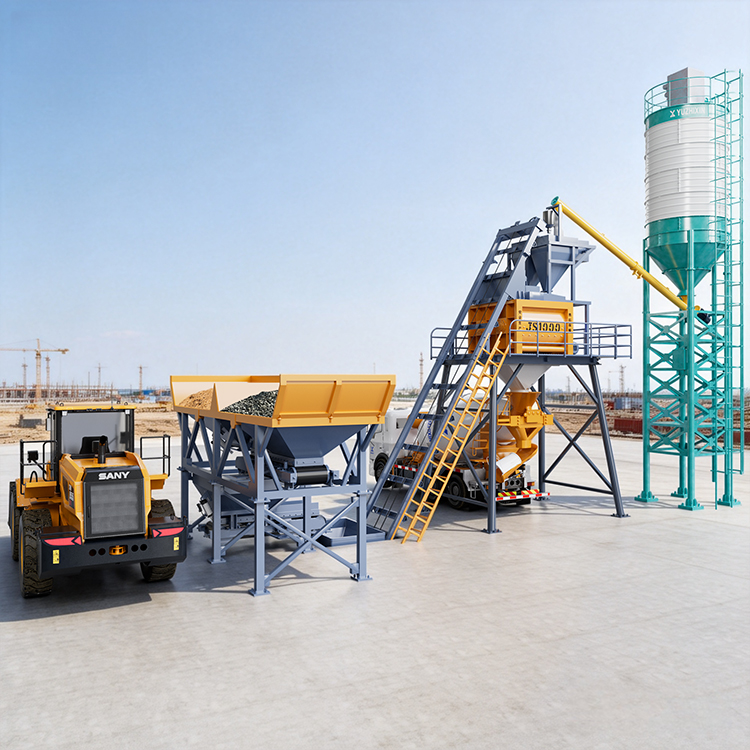
A stationary concrete batching plant reaches its nameplate only when the support train around it is sized to the same hourly rate. Sizing a stationary concrete batching plant without its support is half a spec. The mixer is the hub, but silos, conveyors, a pump, and a loader decide whether 240 m³/h actually leaves the gate. Matching parts to the drum, not the brochure, is what separates a smooth line from a bottleneck.
A Vietnam Plant Hit 240 m³/h Only After the Right Support
What the First Layout Missed
A commercial concrete yard in Vietnam set a stationary concrete batching plant at 240 m³/h but fed it with one 100-ton silo and a single short belt. The mixer waited on cement while the conveyor capped out, so real output stalled near 150. The yard bought capacity on paper and a bottleneck in steel, because the support was picked after the drum instead of with it.
How the Full Train Came Together
The yard added three 200-ton silos, twin screw lines, and a 30-metre belt to the stationary concrete batching plant, plus a wheel loader and two pump trucks. Cement now arrived faster than the mixer could use it, and the belt cleared the charge without backup. Within a week the line held 240 m³/h across a full shift. The fix was not a bigger mixer — it was the train around it, finally matched.
How a Stationary Concrete Batching Plant Pulls a Full Train
The Batching and Conveying Core
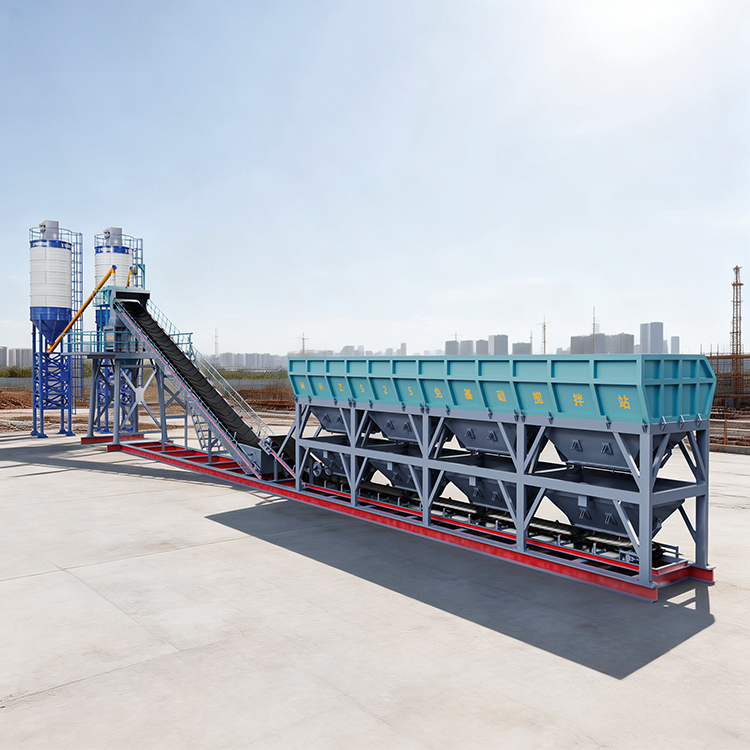
A stationary concrete batching plant starts with the aggregate batching machine: two to four bins, a scale, and a belt that lifts stone and sand to the mixer. Most stationary concrete batching plant buyers under-size the belt, not the mixer. The belt speed and width must clear the mixer's per-batch demand, or material queues at the boot. Yuzhixin Machinery sizes this core to the plant rating, so the conveyor and the twin-shaft mixer breathe together instead of one racing while the other starves.
Silos, Pumps and Delivery
A stationary concrete batching plant draws cement from bolted silos through screws into the weigh hopper, then pushes fresh mix out by pump or truck. A stationary concrete batching plant that starves on cement wastes the drum it paid for. The screw diameter and the pump rate must both exceed the mixer's cement draw, or the hopper runs dry mid-batch. Add a wheel loader for the aggregate bins and a buffer water tank, and the line stops waiting on manual fills. Together these pieces form the train that the drum alone cannot run. A buffer water tank with a float switch also keeps the additive line steady, so the mix never waits on a manual top-up during a peak pour.
What Standards the Support Equipment Must Meet
Electrical, Dust and Load Rules
A stationary concrete batching plant and its support must clear the same bar as the mixer. The stationary concrete batching plant line still needs tagged disconnects at each motor. ANSI/NFPA 70 drives the panel and earthing design, while OSHA 29 CFR 1910.212 expects guards on every belt, screw, and rotating shaft. ISO 8970 frames dust control at the silo inlet, and ISO 9001 covers the build. A support item that fails these checks can halt the whole line on the first safety walk, which costs more than the part saved.
How to Select, Install and Maintain the Support
Matching Capacity to the Mixer
A stationary concrete batching plant should set the size of everything around it. Specifying a stationary concrete batching plant by drum alone hides the real cost. Rate the belt, screws, silos, and pump to the peak hourly draw, not the daily total, because the line lives or dies at the 8 a.m. peak. Undersize any one and the mixer idles; oversize all and capital sits idle. A balanced train spends once and runs flat, which is the cheaper path across a multi-year commercial contract.
Install and Commission Steps
A stationary concrete batching plant support train installs in a clear order: pad and foundations, silos and batching machine, then conveyors, then screws and pump, then controls. Commission each link with a no-load run before the next joins, so a fault stays local. Wire the PLC to the weigh cells early and prove one recipe end to end. Yuzhixin Machinery ships the run-test cards per skid, so the site repeats a known start rather than learning the train on a live deadline.
Upkeep That Protects Output
A stationary concrete batching plant keeps its rate only with steady upkeep on the support. Grease belt rollers and screw ends on the hour meter, watch silo level lights, and check the pump seals before each shift. A worn flight or a clogged vent steals output the mixer cannot recover. An Algerian HZS90 ran two seasons at 90 m³/h with only seal and filter swaps, because the crew logged support checks on one card and acted on the first odd sound from the drive. A monthly torque check on the belt splice stops a sudden break that idles the whole train for a shift.
A stationary concrete batching plant is only as fast as the train feeding it. Silos, conveyors, a pump, a loader, and clean controls turn a rated drum into real cubic metres at the gate. The perfect match is not the biggest mixer — it is every support piece sized to the same hour, installed in order, and cared for as one system.
Frequently Asked Questions
Question
What equipment pairs best with a stationary concrete batching plant?
Answer
The closest match is a train sized to the same hourly rate: bolted cement silos with screw conveyors, an aggregate batching machine and belt, a concrete pump or truck mixer, a wheel loader for the bins, and a buffer water tank. Such a plant hits nameplate only when each link clears the mixer's per-batch draw, so cement, stone, and sand all arrive together instead of queuing at the boot or the hopper.
Question
Why does a single silo bottleneck a high-rate plant?
Answer
A single silo feeds the weigh hopper through one screw, so cement arrival caps at that screw's rate. On a 240 m³/h line the mixer can outrun one screw, and the hopper runs dry mid-batch while the drum idles. Adding silos and twin screw lines lets cement arrive faster than the mixer uses it. The bottleneck sits outside the drum, which is why support must be sized with the plant, not after it.
Question
How should the support train be installed in order?
Answer
Install in this order: pad and foundations, then silos and the batching machine, then conveyors, then screws and pump, then controls. Commission each link with a no-load run before the next joins, so a fault stays local instead of buried in a live line. Wire the PLC to the weigh cells early and prove one recipe end to end before the trucks roll, which protects the start date from hidden mismatches.
Question
Can the same support serve a future bigger mixer?
Answer
Only if it was sized to the peak, not the current drum. Belt, screws, silos, and pump rated to the next mixer size carry the upgrade without rebuild; parts sized to today's plant will bottleneck the new one. A balanced train bought once at the higher rate costs more up front yet avoids a second purchase. Match the support to the hour the site expects in three years, not the drum it runs today.
Question
Where do the silos and loader sit for smooth flow?
Answer
Place silos close to the weigh hopper so screw runs stay short, and keep the wheel loader path clear between the aggregate stockpile and the bins. A tight row shortens cabling and cuts surge load, since each screw starts against a near hopper. Leave safe access for the bulk cement tanker and keep the loader cycle off the mixer's batch beat, so feeding never stalls the charge leaving the drum.
Question
Do support items need the same safety guards as the mixer?
Answer
Yes, every support link meets the same bar once running. ANSI/NFPA 70 drives the panel and earthing design, and OSHA 29 CFR 1910.212 expects guards on every belt, screw, and rotating shaft before power goes on. ISO 8970 frames dust control at the silo inlet. A guard missing on a conveyor or screw can halt the whole line on the first safety walk, so the checks cover the train, not just the mixer.