 EN
EN


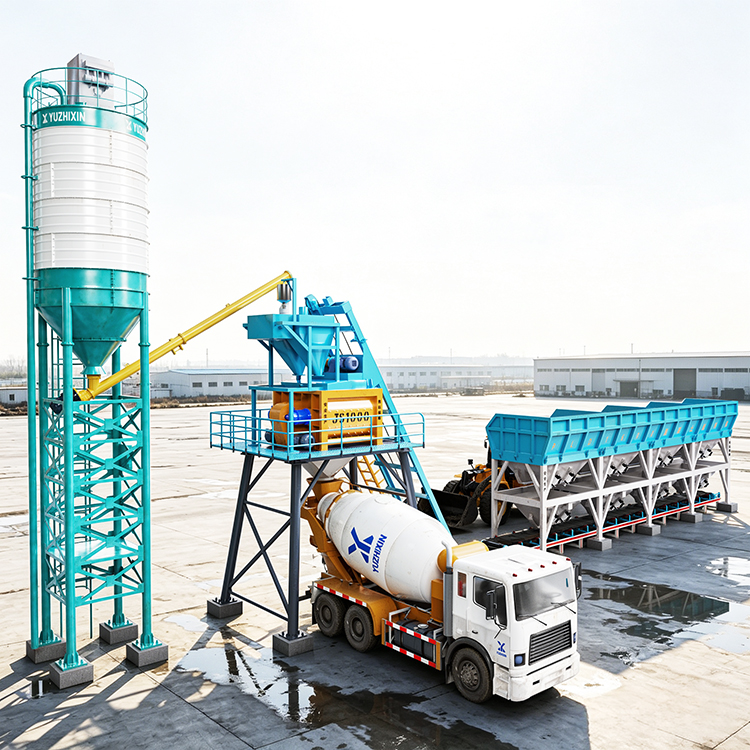
Beste betonmengaanleg vir warm-weerwerfplekke
‘n Bouprojek in die Midde-Ooste het 40 MPa beton vir ‘n waterbehandelingsfasiliteit se fondament gespesifiseer, met betonplaasing wat tussen Junie en Augustus plaasgevind het toe omgewingstemperature gereeld bo 45°C was. Die aanvanklike beton Menginstallasie konfigurasie — ’n standaard tweevleuel-mengmasjien met waterdosering by omgewingstemperatuur — het beton voortgebring wat by die stortplek aangekom het teen 36–38 °C, wat die maksimum aanlegtemperatuur van 32 °C, soos gespesifiseer deur ACI 305, oorskry. Die onderwerper het ’n verkoelde watersisteem met ’n geïnsuleerde bergingsvate van 20 000 liter en vlaakys-dosering geïnstalleer, wat die partietemperatuur tot 24–26 °C verminder het en volledige werkbaarheid herstel sonder om die gespesifiseerde water-sementverhouding te oorskry.
Betonskepping onder warm weer gaan nie net daaroor dat beton gemeng kan word nie — dit gaan daaroor of die beton Menginstallasie beton by ’n temperatuur kan lewer wat laag genoeg is om toereikende aanleg- en afwerktyd te verseker voordat aanvanklike stelling begin.
Hoe hitte beton tydens mengsel aanval
Versnelde hidrasie en slampverlies
Die sementhidrasiespoed verdubbel ongeveer vir elke 10°C-toename in beton-temperatuur. Beton wat by 35°C gemeng word, hidreer vier keer vinniger as beton by 15°C. In praktiese terme kan ’n mengsel met 90 minute werkbaarheid by 20°C sy werkbaarheid binne 35–45 minute by 35°C verloor — dikwels nog voordat die laaste vragmotor van dieselfde mengsiklus die stortplek bereik.
A beton Menginstallasie werking sonder temperatuurbeheer in warm weer produseer beton wat by die stortingplek teen ’n verhoogde temperatuur aankom. Die byvoeging van water op die werf om die verslapping te herstel, verhoog direk die water-sementverhouding en verminder die saamdruksterkte met 2–4 MPa vir elke 10 mm addisionele verslapping — ’n kompromis wat die meeste projekspesifikasies skend.
Risiko van termiese krake
Massiewe betonbestellings onder warm weer staar ‘n dubbele termiese uitdaging in die gesig: ‘n hoë aanvanklike betontemperatuur gekombineer met die temperatuurstyging as gevolg van sementhidrasie kan die interne betontemperatuur tot 70–85 °C dryf. Wanneer die oppervlak vinnig afkoel na vormverwydering, oorskry die temperatuurverskil tussen kern en oppervlak 20 °C — die drempel waarby ACI 207 termiese krakingontleding aanbeveel. A beton Menginstallasie met temperatuurbeheer verskaf die eerste verdediglynie deur die aanvanklike temperatuur te verlaag en die piek hidrasietemperatuur dienooreenkomstig te verminder.
Plantontwerpkenmerke wat hoë temperature bekamp
Gekoelde water- en ysblaarsamevoegstelsels
Water temperatuurbeheer bied die doeltreffendste verkoeling per eenheidkoste in ‘n beton Menginstallasie . Die vervanging van omgewingswater by 30°C met gekoelde water by 1–3°C verminder die beton-temperatuur met ongeveer 3–5°C — ’n funksie van water se hoë spesifieke hitte en sy massa-verhouding in die mengsel. ’n Koelinstallasie wat op 10–20 kW per 60 m³/u van die aanleg se uitset grootgemaak is, en wat ’n geïsoleerde roestvrystalen voorraadtank voed, verskaf die koelvermoë vir voortdurende produksie tydens warm weer.
Vir meer aggressiewe verkoeling word vlaakys in plaas van ’n gedeelte van die partypwater gebruik. Ys absorbeer 335 kJ/kg tydens smelt — die latente smeltwarmte — vergeleke met 4,2 kJ/kg per graad vir vloeibare water. Die vervanging van 50% van die partypwater met ys kan die betontemperatuur met 10–12°C verminder. Die beton Menginstallasie vereis ’n vlaakysmasjien, ’n geïsoleerde voorraadhok met ’n skroefvoerder, en ’n weegbak wat ys volgens gewig in die mengmasjien doseer tydens die aanvanklike droogmengfase, sodat die ys kan smelt en die gruis en sement kan koel voordat vloeibare water bygevoeg word.
Aggregaatkoeling deur stikstofinspuiting of gekoelde lug in grof-aggregaatbokse verteenwoordig ’n hoër-kosteopsie wat hoofsaaklik gebruik word vir massakonkrete in damkonstruksie of kernkragbehouers waar aanlægtemperature onder 15°C vereis word. Vir die meeste kommersiële en infrastruktuurprojekte verskaf gekoelde water plus yskristalle toereikende temperatuurbeheer teen bestuurlike kapitaal- en bedryfskoste.
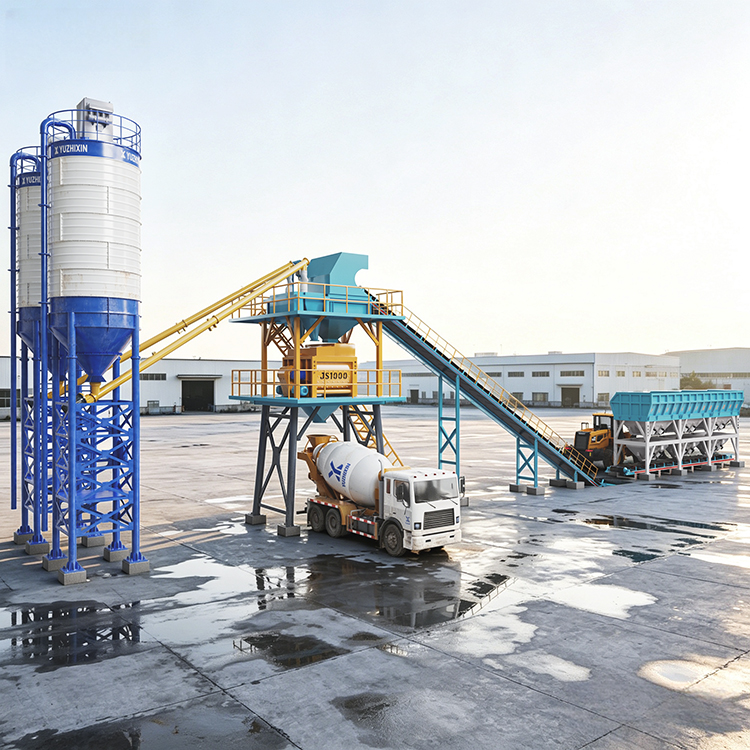
Kies van Mengtipe
Die mengintensiteit van ’n beton Menginstallasie beïnvloed direk hittegenerering tydens dosering. Hoëspoedplaneêre mengmasjiene genereer meer wrywingshitte as twee-as-mengmasjiene by gelyke uitset — ’n addisionele temperatuurverhoging van 2–4°C oor die mengsiklus onder warm weerstoestande. Twee-as-mengmasjiene met veranderlike-frekwensie-aandrywings wat die mengspoed tydens die nat-mengfase kan verminder, genereer minder hitte terwyl homogenisering behou word, wat hulle die verkose keuse maak vir aanlegte in warm klimaatgebiede wat standaard gereedgemengde betongrade vervaardig.
Bedryfsaanpassings
Die bestuur van die totale voorraadgruis beïnvloed beton temperatuur beduidend. Besproeiingsstelsels op grof gruisvoorraaddoeke verskaf verdampingskoeling — nat gruisoppervlaktes koel af terwyl vog verdamp, wat die gruis temperatuur met 5–8°C verminder in vergelyking met droë voorraaddoeke wat aan direkte sonlig blootgestel is. Skadustrukture oor gruisbokse, al is dit duur, verminder piekgruis temperature met 10–15°C in klimaatgebiede met direkte sonlig. Wit geverfde sement silos weerkaats sonstraling, wat die sement temperatuur 8–12°C laer hou as ongeverfde silos — ’n eenvoudige wysiging wat minder as $1 000 per silo kos.
Gereelde vrae
Hoe beïnvloed warm weer betonmengaanleg prestasie?
Hoë omgewings temperature versnel die hidrasie van sement, wat die betonwerkbaarheidstyd verminder van 90 minute tot so min as 35–45 minute by 35°C. Mengmasjienkomponente genereer addisionele wrywinghitte tydens menging, en gruisvoorrade absorbeer sonstraling wat die partyskaptemperatuur verhoog met 10–20°C bo die omgewingstemperatuur tensy dit aktief gekoel of geskerm word.
Watter koelsisteem het ’n betonmengaanleg vir warm klimaatgebiede nodig?
’n Gekoelde watersisteem met ’n koelmeganisme-kapasiteit van 10–20 kW per 60 m³/u van aanleguitset, wat ’n geïsoleerde stoorhouer voed, verskaf primêre koeling. Vir plekkingspesifikasies onder 25°C lewer vlaakysisteme wat 40–50% van die partyskapwater vervang ’n addisionele temperatuurverlaging van 8–12°C deur die latente hitte van ys wat smelt.
Watter mengertipe hanteer hoë temperature beter?
Twee-as-mengmasjiene met veranderlike-frekwensie-aandrywings veroorsaak minder wrywinghitte (gewoonlik ’n styging van 1–2°C per siklus) as planeêre mengmasjiene (’n styging van 3–5°C) onder warm toestande. Die opsie om die mengspoed tydens die nat-mengfase te verminder terwyl homogenisering behou word, maak twee-as-konfigurasies doeltreffender vir die vervaardiging van gereedgemengde beton onder warm weer.
Hoe kan die temperatuur van gruis by ’n betonmengaanleg beheer word?
Spuitwaterbesproeiing op grofgruisvoorraadplekke verskaf verdampingskoeling (’n verlaging van 5–8°C). Skadustrukture oor houers verminder die piekgruis-temperatuur met 10–15°C. Witverfde silo-buitekante hou die sementtemperatuur 8–12°C laer. Stikstofinspuiting of gekoelde lug deur gruishouers bied die aggressiefste koeling vir projekte wat aanleg onder 15°C vereis.
Wat is die maksimum betontemperatuur wat onder warm weer toegelaat word?
ACI 305 beveel ’n maksimum aanplasingstemperatuur van 32–35°C vir algemene konstruksie aan. Massakonkrete-spesifikasies vereis dikwels ’n aanplasing onder 21–25°C om termiese kraking te beheer. Projekspesifikasies het altyd voorrang, met infrastruktuur- en kernkragprojekte wat dikwels die strengste temperatuurbeperkings spesifiseer.
Hoe verander die doseerreeks van ’n betonmengaanleg in warm weer?
Deur waterbyvoeging uit te stel totdat die grondstowwe en sement vir 10–15 sekondes droog gemeng is, word sementdeeltjies op die oppervlak van die grondstowwe afgelaai sonder dat hidrasie onmiddellik versnel word. Ys wat tydens die droogmengfase bygevoeg word, smelt en koel die hele partjie af voordat vloeibare water die primêre hidrasiereaksie begin. Die dosering van bymiddels verskuif na vertragingsmiddels en hidrasiebeheermiddels eerder as net standaard waterverminderaars.